

Frank Lloyd Wright Building Conservancy
The Frank Lloyd Wright Building Conservancy facilitates the preservation and stewardship of the remaining built works designed by Frank Lloyd Wright through advocacy, education, and technical services.
Order created an identity that captures the legacy of Wright’s designs, the community built through the organization, and the immediate necessity of their work.
Collaborators
Project team
Jesse Reed, Partner
Garrett Corcoran, Designer
Megan Nardini, Operations
Brooklyn Office
As the only organization focused exclusively on all of Wright’s remaining buildings, the Conservancy’s work preserves this impactful artistic, cultural, and architectural heritage for today and future generations.

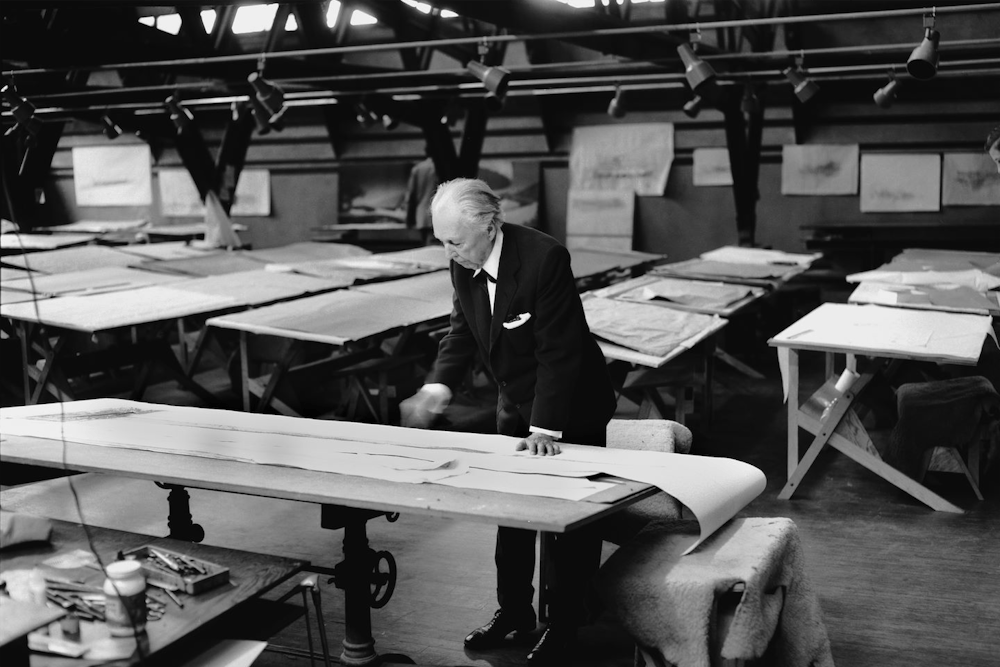
Photo from The Frank Lloyd Wright Foundation Archives (The Museum of Modern Art | Avery Architectural & Fine Arts Library, Columbia University, New York).
History: An influential past
With Frank Lloyd Wright being considered one of the greatest American architects, the process began with understanding the legacy, impact, and process behind his work.


Photo by Christopher Little courtesy of Western Pennsylvania Conservancy


With an innovative mind for space, structure, and form, Wright’s buildings redefined the possibilities of architecture.


Photo by Carol M. Highsmith from the Library of Congress online archives.


Photo by Tom Rossiter.


Image from The Frank Lloyd Wright Foundation Archives (The Museum of Modern Art | Avery Architectural & Fine Arts Library, Columbia University, New York).


Photo by Tim Long courtesy of Frank Lloyd Wright Trust.
Seeking to strengthen the relationship between how and where people live, Wright believed that “…architecture is life; or at least it is life itself taking form…”.


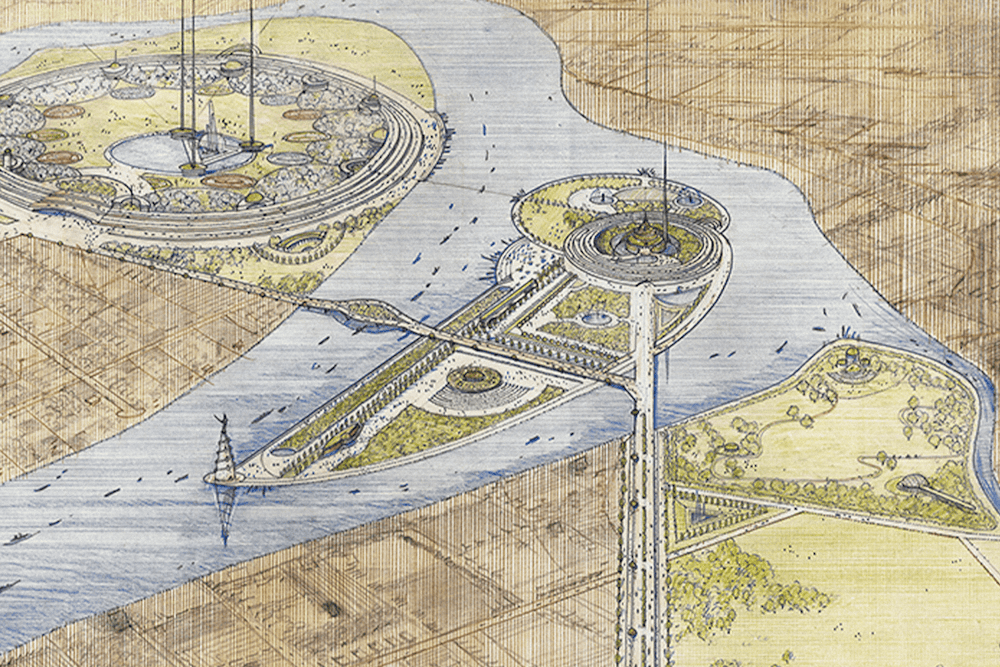


Throughout his life, Wright developed new categories of architecture and created more than 1,100 designs for government and commercial spaces, hotels, towers, recreational complexes, museums, residential buildings, and more, with nearly half realized.
Today, Wright’s works are still used as museums, studios, residences, and beyond, with their influence continuing to shape the lives of those who visit.


Photo by Jill Richards.


However, over time, buildings have been lost to neglect, tragedy, or demolition. In the 1980s, a group of concerned Wright homeowners, architects, scholars, preservationists, and admirers gathered with the goal of protection. As a result of these meetings, in 1989, the Frank Lloyd Wright Building Conservancy was founded.


Over fifteen percent of Wright’s buildings have been destroyed but with the Conservancy’s work, thousands of members and supporters worldwide have a dedicated network and community of resources, knowledge, and skills to preserve what remains for generations to come.
Identity: Capturing the community
Built to embrace the span of the community and need for the Conservancy's work, the system balances past, present, and future through form, color, and typography.

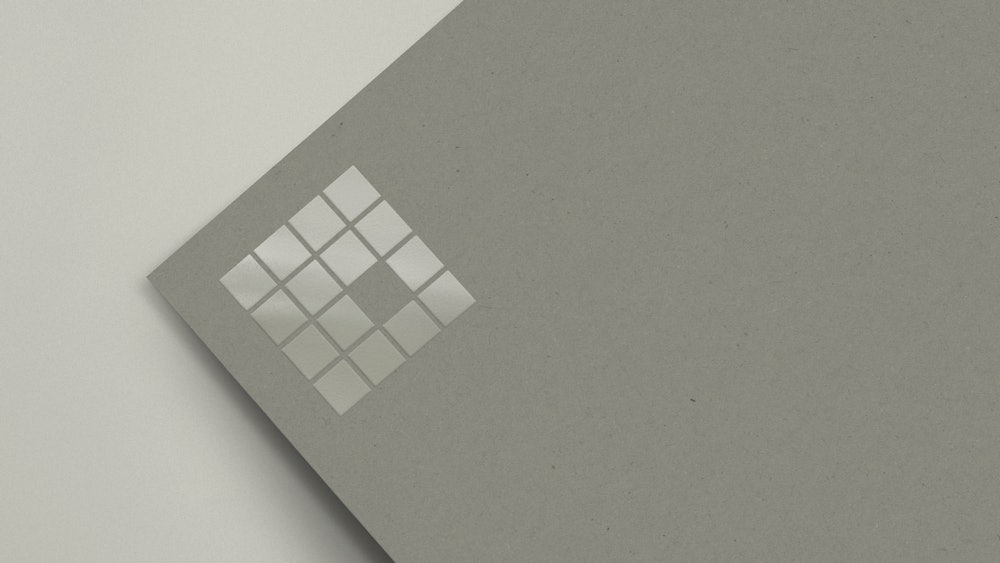


The red square has long been a “signature” throughout all of Wright’s designs, becoming an understood representation of his work.
The identity creates a network with the familiar shape but highlights the impact the loss of even one building has on the larger community.


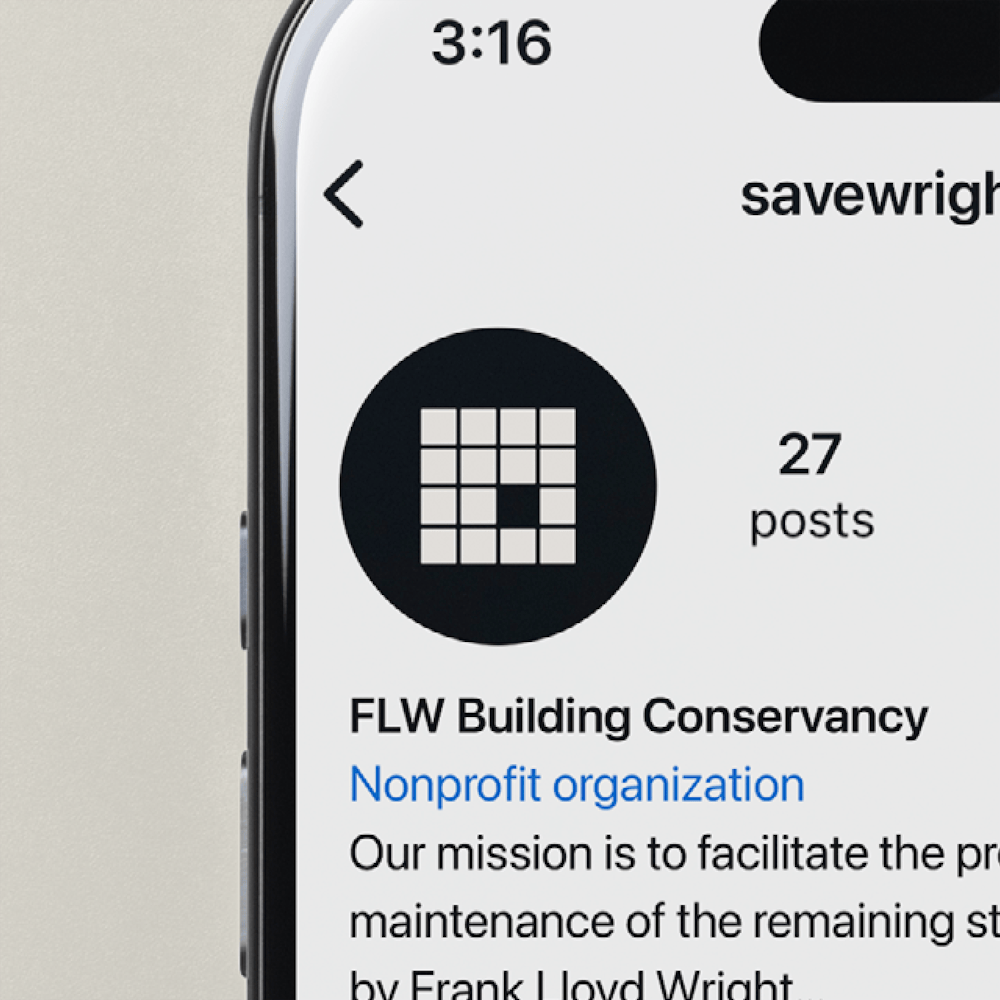
Through these simple forms, this symbol tells the story of the Conservancy throughout the system.


Used both together and separately, the symbol and wordmark create an adaptive identity toolkit.


Color is used to express the range of spaces within Wright’s work while adding depth for each value to capture how light and material interact.
In his written communication, Wright had a particular affinity for a typewriter version of Vogue Intertype.

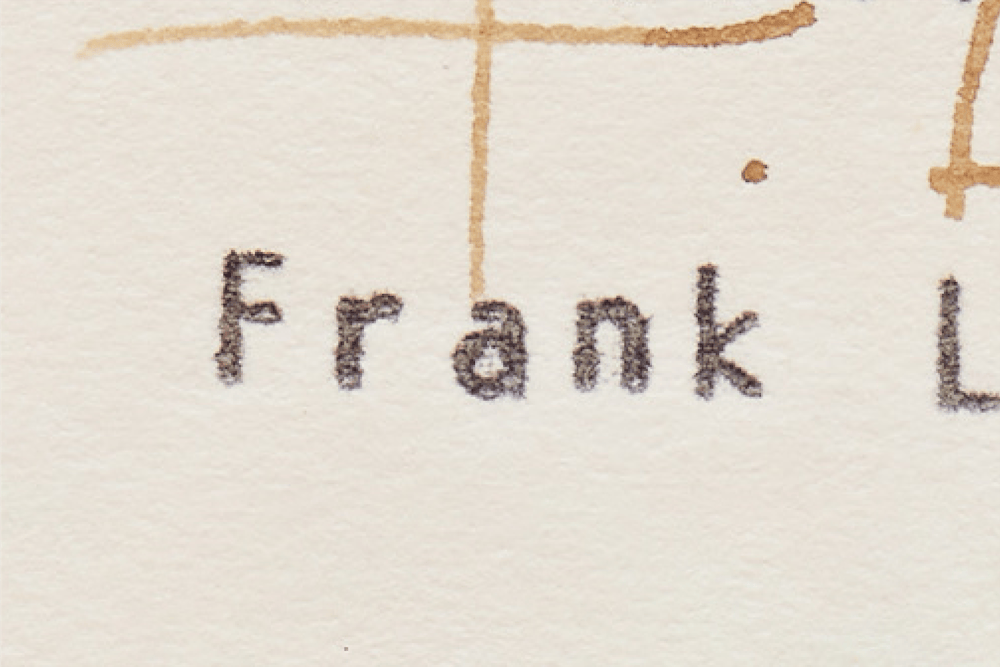


Wright's use of this typeface inspired Reply→, drawn by François Rappo, which references this pivotal phase in the development of modern American design.


A customized version of Reply from Optimo Type Foundry→, is used throughout the identity as the primary voice of the system.


Characters are rooted in geometric design and American modernism, but bring them forward for contemporary use.
Throughout the identity, the typeface provides an accessible tool to communicate the Conservancy’s work while also capturing the legacy of Wright.


These angled, geometric forms became a framework for the extended graphic language.
System: Building a language
In use, the full identity system combines and extends the elements of the toolkit, allowing them to capture the vision of the Conservancy through the individual areas that define it.


The symbol acts as an anchor throughout the materials.

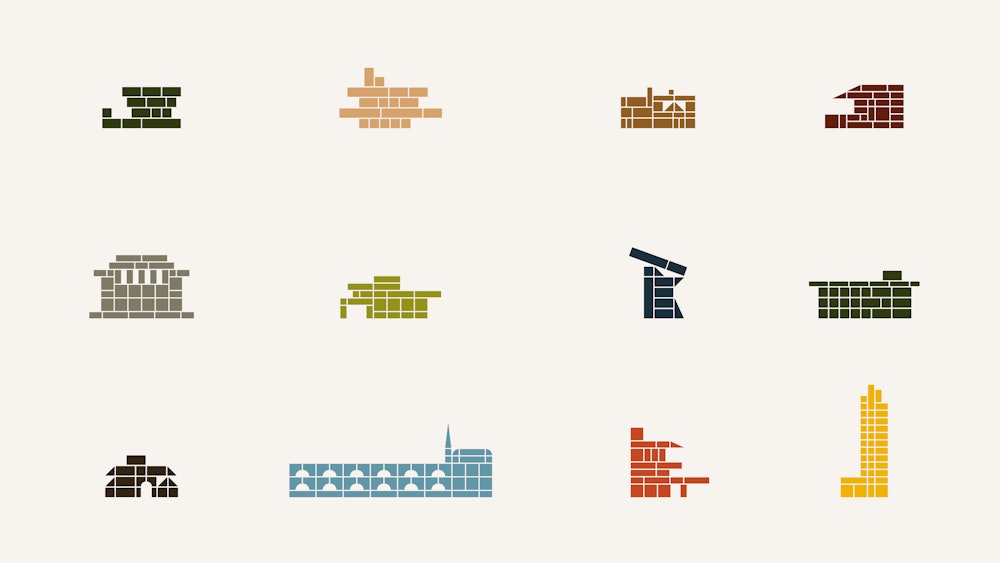
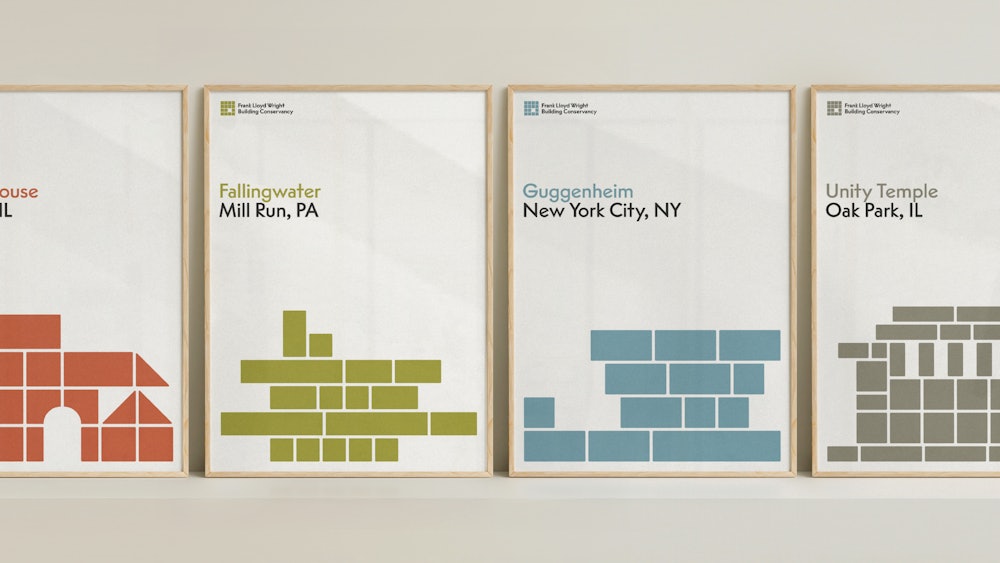
As the story goes, Wright’s fascination with architecture began with a gift of Froebel blocks from his mother. The identity extends this idea through the graphic language of the symbol by creating an illustration system that adapts to each individual structure.

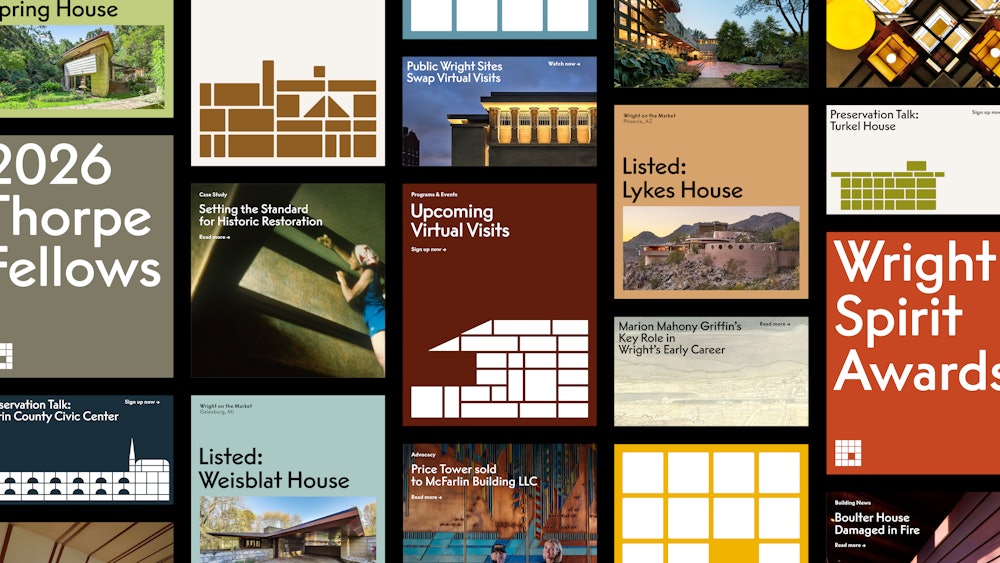
Together, these elements allow the system to capture the wide range of tones and materials throughout the Conservancy’s work.

In addition to the core identity, the symbol is extended to SaveWright→, the Conservancy’s magazine. This adapted symbol highlights the “missing” square to be saved.



Visit the Conservancy's site at savewright.org→.
Comprehensive guidelines were developed to allow the Conservancy’s team to implement and expand the system for all future applications.


